

Are jelly bags waterproof? They're water-resistant
Contents
The short answer — water-resistant, and made for wet days.
Jelly bags are water-resistant, so the TPU or PVC never soaks anything up and rain, splashes, sea spray and a dripping swimsuit simply wipe off, which is why they're made for the beach, the pool and the wet commute. Here's what that means in practice.
The material: TPU and PVC don't absorb water
Both TPU and PVC are non-porous plastics. Unlike leather (which stains and warps) or fabric (which soaks), water beads off the surface and wipes away with a damp cloth. Rain, sea spray and pool splashes do nothing to the material itself — this is the single biggest practical advantage of a jelly bag.
Water-resistant vs waterproof
Water-resistant means the material repels water and isn't harmed by it, which is exactly what TPU and PVC do, so a jelly bag takes rain, a wet swimsuit and a spilt drink in its stride and is dry again after one wipe. Waterproof is the word for specialist kit made to go underwater, like a roll-top dry bag, while a jelly bag is an everyday handbag made for rain, the beach and the pool.
In the rain: jelly vs leather, canvas and nylon
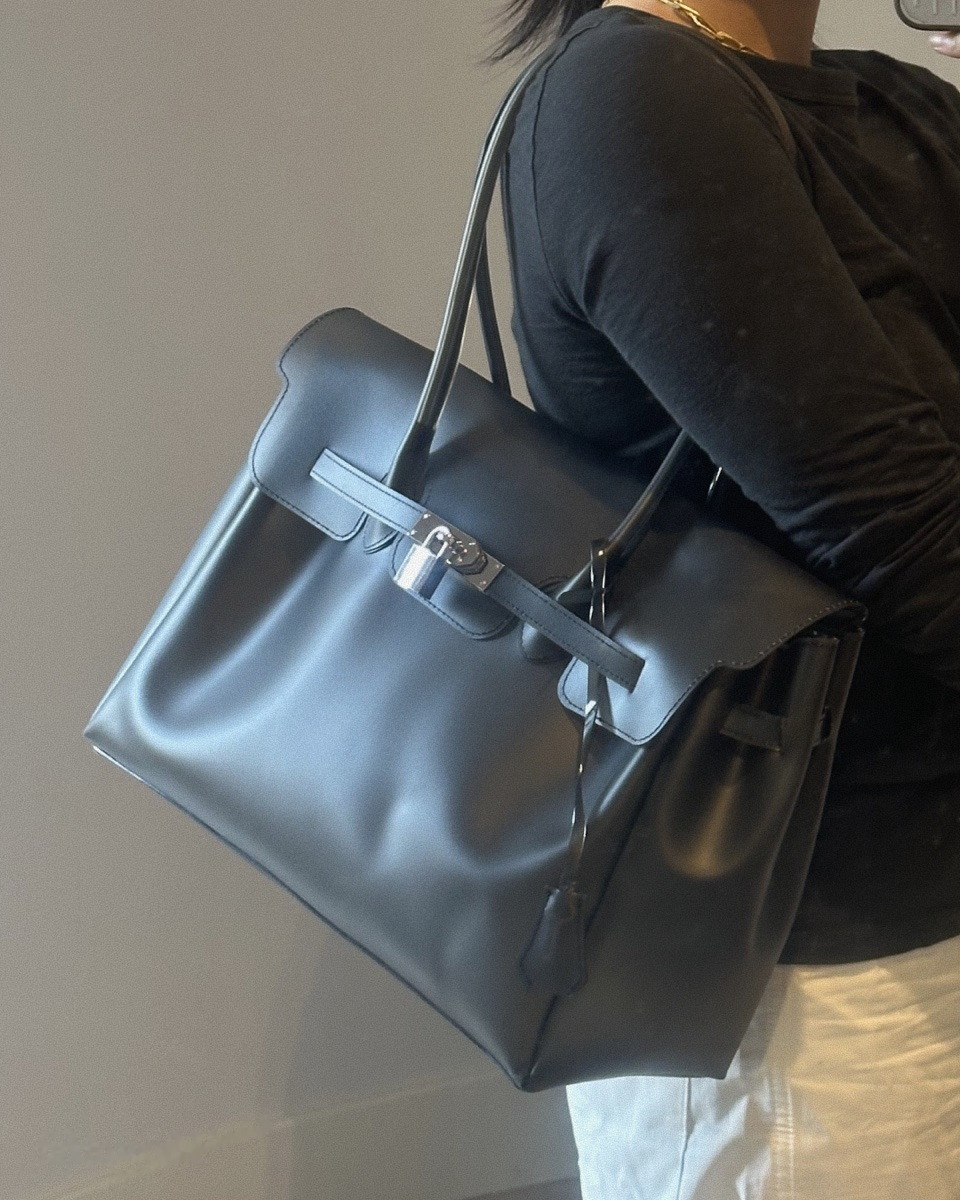
Jelly bags are marketed for summer, but the season they most clearly outperform leather and canvas is the rainy one. A sudden downpour that would spot a suede bag or soak a canvas tote does nothing here. Wipe it down when you get in and it looks as it did, which makes a jelly bag one of the easiest rainy day bags to own.
| Material | What rain does | Rough drying time |
|---|---|---|
| Leather | Absorbs water, leaving watermarks and tide lines; stiffens as it dries and cracks over repeated soakings | Overnight to two days |
| Suede | One heavy shower can flatten the nap for good | A day or more |
| Canvas | Soaks through to the contents and can mildew if put away damp | Several hours to a day |
| Nylon | Forgiving, but stays damp if folded away | A few hours |
| Jelly (TPU or PVC) | Absorbs nothing; rain beads off and wipes away | Minutes |
The full material-by-material comparison, including where leather still wins, is in jelly vs leather, canvas and straw.
Packing a tote for a rainy day
Our 35cm tote and East West close with a flap and a turn-lock, and the jelly shell takes the weather, so packing for a wet day is mostly about order: the mistake is treating the inside as one big room, so divide it into three zones.
| Zone | What goes in | Why there |
|---|---|---|
| Top, against your body | Phone, cards, keys, travel pass, earbuds | Out in a second without rummaging |
| Middle | Notebook, papers, tickets, chargers, lip balm, tissues | Paper stays flat in a document folder, small things stay together |
| Bottom | Water bottle, lunch, a laptop or tablet in its sleeve | Heavy things keep the bag steady on the shoulder |
The umbrella. Keep it folded in its sleeve on the outer edge, as far from paper as the bag allows, and the inside of the tote stays as tidy as the outside. Once it's a habit it takes thirty seconds.
When a bag gets wet
- Get under cover and empty it, starting with whatever suffers fastest: phone, wallet, paper.
- Open every zip and pocket, because trapped damp is where musty smells begin.
- Blot the outside with a dry towel or microfibre cloth. Press and lift rather than rubbing.
- Let it dry slowly at room temperature, away from radiators, hairdryers and direct sun.
A jelly bag is the easy one: it needs nothing more than a dry cloth, and since nothing soaks in, there's no tide mark to worry about. If it caught salty or dirty spray, wipe it with a damp cloth and a little mild soap first. Never dry it on a radiator or with a hairdryer: heat is worse for TPU and PVC than water ever will be. The rest of the routine is in how to clean a jelly bag.
At the beach and pool
Home turf. Sand brushes off, splashes wipe away, and there's nothing to ruin. The one rule is sun, not water: prolonged direct sun can yellow a clear finish over time, so keep a translucent bag in the shade of your towel between dips. In Australia, every 35cm tote and East West in stock, with Australian prices and delivery from our Sydney stock, is on beach bags in Australia, and the pool-day packing list is in what bag to take on holiday. Full beach and holiday styling is in how to style a jelly bag in summer.
More questions? See the FAQ or email us at hello@jelli.world, or DM us on Instagram @jelliworld_official.
Last reviewed: 2026-10-19
The wet-weather picks

Common questions
Are jelly bags waterproof?
They're water-resistant, so the TPU or PVC never soaks anything up and rain, splashes, sea spray and a dripping swimsuit simply wipe off, which is why they're made for the beach, the pool and the wet commute.
What's the difference between water-resistant and waterproof?
Water-resistant means the material repels water and isn't harmed by it, which is exactly what TPU and PVC do, so rain, splashes and spills wipe off a jelly bag without leaving a mark. Waterproof is the word for specialist kit made to go underwater, like a roll-top dry bag, while a jelly bag is an everyday handbag made for rain, the beach and the pool.
Can a jelly bag get wet?
Yes — getting wet is fine and is one of the material's main advantages. Rain, sea spray and pool splashes bead off and wipe away with a damp cloth, and there's no leather to stain or fabric to soak. Just wipe it dry afterwards. Prolonged direct sun is more of a risk to a clear finish than water is.
Is a jelly bag good for the beach?
It's one of the few bags actually built for it. Sand brushes off, splashes wipe away, and there's nothing to ruin. The only discipline is sun: don't leave a translucent bag baking uncovered in direct sun for hours, as prolonged UV can yellow a clear finish over time. Keep it in the shade of a towel between dips and it'll be fine.
Is a jelly bag better than leather in the rain?
For wet days, yes. Untreated leather absorbs water, which can leave watermarks and tide lines, stiffen the hide as it dries and crack the finish over repeated soakings, and suede fares worse. Canvas soaks through to the contents. TPU and PVC absorb nothing, so rain beads off and wipes away. Leather still wins on formality; the jelly bag wins the wet commute.
What should I do when my bag gets wet in the rain?
Get it under cover and empty it, phone and paper first. Blot the outside with a dry towel rather than rubbing, open every pocket, and let it dry slowly at room temperature away from radiators, hairdryers and direct sun. A jelly bag only needs a wipe with a dry cloth, inside and out. Heat is worse for TPU and PVC than water ever will be.
How should I pack a tote for a rainy day?
Start with a jelly tote, since TPU and PVC shrug off rain, then pack heavy, hardy things at the bottom, paper and chargers flat in a document folder in the middle, and your phone, cards and keys at the top on the side against your body, with the umbrella in its sleeve on the outer edge, well away from paper.