

How to clean a jelly bag
Contents
To clean a jelly bag, wipe it with a soft cloth dampened with lukewarm water and a little mild, pH-neutral soap, then dry it with a clean cloth. Avoid solvents, alcohol-based cleaners and direct heat, and store it out of prolonged direct sunlight so the colour stays clear and true. That is the whole routine — everything below is detail.
The bags this care routine is for


Jelly bags — whether TPU or PVC — are some of the lowest-maintenance handbags you can own, with no conditioning, no patina anxiety and no protection sprays, so how to clean jelly bags of either material comes down to a soft cloth and a little mild soap. Don't put one in the washing machine or soak it in the sink; a wipe does the job, and there are a few things that will quietly ruin one, so here is the full method.
What you need
- A soft microfibre cloth
- A second clean dry cloth
- A small bowl of lukewarm water
- A drop of mild pH-neutral soap (unscented dish soap works)
Five-step cleaning
- Empty and brush off. Empty the bag, turn it upside down, and brush off any loose dust or grit with a dry microfibre cloth so nothing gets dragged across the surface during cleaning.
- Mix a mild soap solution. A single drop of pH-neutral soap in a bowl of lukewarm water is plenty. Do not use alcohol, acetone, bleach, white spirit, nail polish remover, or any solvent. They will fog or crack TPU and PVC.
- Wipe in small circles. Dampen the microfibre cloth, wring it out, and clean the surface in small circles. Focus on the base and the handle creases where dirt collects. Do not soak the bag.
- Dry properly. Wipe the bag with a clean dry cloth to remove all soap and water. Pay attention to seams and the hardware so water marks do not dry on. Let the bag finish drying on a soft surface away from direct sun.
- Store cool, out of sun. Stuff lightly with acid-free tissue or a clean soft cloth so the bag holds its shape, then store it in a cool, dry place away from direct sunlight, radiators and heated surfaces.
What to avoid
- Direct sunlight for long periods. UV is the main cause of yellowing in translucent jelly bags. Park it in shade.
- Heat sources. Radiators, hairdryers, hot car dashboards. TPU and PVC can soften and warp.
- Solvents. Alcohol, acetone, bleach, white spirit and most spray cleaners will haze or crack the surface.
- Pressed contact with dyed surfaces. Translucent bags can pick up colour from denim, dyed leather, or pigmented paper if pressed against them for a long time.
- Sharp objects loose inside the bag. Keys and scissors will scratch the inner wall. Use the inside pouch.
When something goes wrong: five fixes
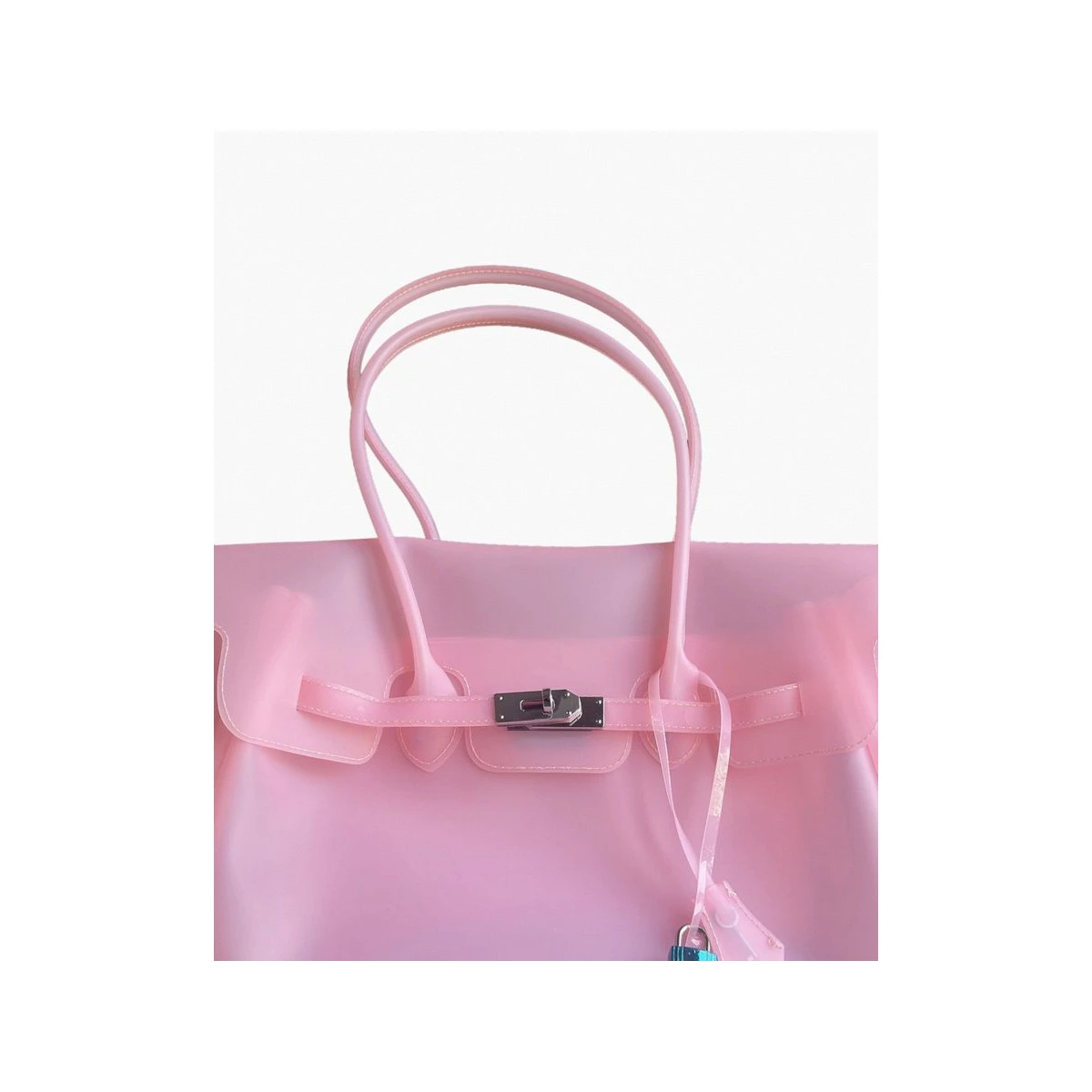
The routine above prevents most problems. For when something has already gone wrong, here is what works on each, and the popular fixes that make things worse.
1. Sticky surface
Usually softening agents in the plastic rising to the surface with heat and age, most common in old flexible plastics. Wash with warm water and mild dish soap, dry fully, then dust lightly with talc or cornflour to absorb the residue. Never alcohol or acetone, which strip the surface and speed it up. If the cause is inside the material, it can come back.
2. Yellowing: do jelly bags turn yellow?
They can, especially clear and translucent ones left in the sun. The cause is either surface grime, which lifts with mild soap, or a change in the plastic itself from sun and heat, which mostly does not. Skip the peroxide "retrobright" tricks from the retro-console world: on a bag they easily leave the finish chalky and blotchy. Once a translucent plastic has changed colour, there is no reliable way back, so prevention is the real fix. We have not published comparative ageing tests for our TPU and PVC bags, so we do not promise that one keeps its clarity longer.
3. Scratches and scuffs
Fine scuffs often buff down with a soft cloth and a trace of mild soap. Avoid magic erasers and cutting compounds, which trade one scratch for a fog of micro-scratches across the gloss. Deep scratches are permanent. Dark opaque colours hide wear best.
4. Plastic smell
A new bag can smell of its material for a few days. Air it open and out of the sun. Never store it sealed, and skip perfume or deodorising sprays, which can react with the surface.
5. Stiffness and cracking
Old flexible plastic can go hard and then crack, usually at the handles and fold points. There is no real fix: softening sprays are temporary and greasy. A brittle vintage jelly is best retired to display duty.
The prevention list (60 seconds, twice a year)
- Store out of direct sun and away from radiators.
- Stuff lightly to hold the shape, never tightly, and never seal it in plastic.
- Wipe it down after beach and rain days, because salt and grime speed everything up.
How long does a jelly bag last?
There is no verified lifespan we can promise. Neither price nor the letters TPU or PVC establish a number of years. What you can do is check the bag as it wears:
- Handles and attachment points. Look for splits, stretching or loose fittings before carrying anything heavy. We do not publish a maximum load rating.
- Closure and hardware. Fastenings should engage without force. Don't pull a closure shut over an overfilled body.
- Surface. Tell dirt that wipes off apart from discolouration, tackiness or cracking that stays. Don't keep scrubbing with stronger chemicals.
- Shape. Store it without crushing it or forcing it around oversized objects.
If something changes on a jelli.world bag, email hello@jelli.world with photographs, the colour or product code, your order details and how it was used and cleaned. Don't try a solvent or heat treatment while you wait. The returns page sets out how faults are handled.
Travel
For travel, stuff the bag lightly to hold its shape and put it in a soft dust bag or pillowcase. Do not store it inside a heated suitcase (e.g. left in a hot car). For flights, carry-on is fine; checked-bag temperature swings are usually fine for short trips but not ideal.
More
For the materials background, see TPU vs PVC bags. For a broader explainer, see what is a jelly bag. For common product questions see the FAQ. Or browse the wipe-clean jelly bags.
This routine is for TPU and PVC. For winter we also make two things that aren't plastic at all. The Lady Maomao bag is a tote in real Mongolian lamb fur, £96.
Caught in the rain? The same wipe-dry routine applies, and what a jelly bag can and can't take in the wet is in are jelly bags waterproof. Just never dry it on a radiator.
Common questions
Are jelly bags durable?
A well-made jelly bag is an everyday bag: TPU and PVC are water-resistant, need no conditioning and wipe clean, and every jelli.world jelly bag is a structured shape that closes with a flap and a turn-lock. What wears one out is heat, long strong sun and solvent cleaners, so the care below is mostly about avoiding those. We don't publish a lifespan in years, because we haven't run long-term tests.
Do jelly bags crack?
They can if they're mistreated: solvents such as alcohol, acetone and nail polish remover, a hot car or a radiator, and sharp folds, especially in the cold, are what crack a flexible plastic. Clean with mild soap and water, keep the bag away from heat and store it loosely filled so it isn't creased.
Do jelly bags turn yellow?
A translucent jelly bag can yellow with long hours of strong sun and heat, and that yellowing is usually permanent, so store it out of direct sunlight and away from heat. We haven't tested whether TPU or PVC yellows less, so we don't claim either does.
How do you clean a clear bag?
Wipe it with a soft cloth, lukewarm water and a drop of mild pH-neutral soap, then dry it with a second clean cloth. Brush sand or grit off first so it doesn't scratch, and never use alcohol, acetone or bleach, which can haze a clear surface.
Why is my jelly bag sticky?
Usually it is softening agents in the plastic rising to the surface with heat and age, which is most common in old flexible plastics. Wash it with warm water and a little mild dish soap, dry it fully, then dust it lightly with talc or cornflour to absorb what is left. Never use alcohol or acetone, which strip the surface and make it worse. If the cause is inside the material, it can come back.
How long does a jelly bag last?
We cannot give a verified number of years. Lifespan depends on the construction, formulation, use and storage, and we have not published long-term comparative tests for our TPU and PVC bags. Check the handles, fastenings and surface as it wears, follow the care routine, and if something changes on a jelli.world bag, email hello@jelli.world with photos before trying any solvent or heat fix.
Can I put a jelly bag in the washing machine?
No. Machine washing will damage the hardware, warp the body and can crack the material. Always clean by hand with a damp cloth and mild soap.
How do I get a jelly bag clear again if it has yellowed?
Yellowing from UV exposure or heat is usually permanent. Some surface haze caused by dirt or oil can be lifted with mild soap and a microfibre cloth, but discoloration set into the material itself cannot be reversed. Prevention — storing out of direct sun — is the only reliable fix.
Can jelly bags get wet in the rain?
Yes. They're water-resistant, so the TPU or PVC never soaks anything up and rain simply beads off and wipes away. Dry the bag with a clean cloth afterwards to keep the hardware bright.
What should I never do to a jelly bag?
Do not use alcohol, acetone, nail polish remover, bleach, white spirit or any solvent-based cleaner — they will fog, crack or melt the surface. Do not leave the bag in direct sunlight or near radiators. Do not store it pressed against painted or dyed surfaces, as colour transfer can happen.
Last reviewed: 2026-10-25